
Indian benchmark indices, Sensex and Nifty, opened in positive territory, primarily driven by a strong performance in IT stocks, sustained foreign fund inflows, and a dip in global crude oil prices, despite a hawkish stance from the US Federal Reserve. Track Sensex, Nifty on July 30.

Mutual fund (MF) investor growth has slowed for the second consecutive year, with 4.4 million net new investors added in calendar year 2026 till September, the slowest pace since 2023. This deceleration coincides with weakness in the equity market, increased volatility, stricter regulatory guidelines on high-risk trading, and a decline in new fund launches and offerings.

Union Communications Minister Jyotiraditya Scindia announced India's ambition to lead the world in 6G mobile technology and become a designer of global technology standards. Speaking at the Global Fintech Fest 2026, Scindia highlighted India's shift from being a technology market to a technology maker, emphasizing progress in 5G rollout, affordable data, and digital infrastructure driving fintech growth, while also stressing the importance of digital security.

Mahindra Group's Bristlecone, a supply chain services provider, has reported a 24 per cent year-on-year topline growth and aims for a billion-dollar valuation. The company is expanding its offerings in AI, data analytics, and product engineering, focusing on resilient supply chains for global enterprises.

Foreign portfolio investors (FPIs) have withdrawn nearly Rs 5,109.21 crore from Indian government securities under the fully accessible route (FAR) in just three days, driven by global uncertainty, elevated crude prices, rising US Treasury yields, and a depreciating rupee.

Ministry of Information and Broadcasting Secretary Chanchal Kumar outlined the critical factors for the media and entertainment sector's next growth phase, including robust intellectual property, sustainable revenue models, and disciplined investments. Speaking at the CII Big Picture Summit, he emphasised the government's role in fostering an environment for creative enterprises and addressing challenges posed by digital platforms and AI. The CII White Paper also projected a USD 100 billion Indian M&E sector, advocating for stronger IP and regulatory reforms.

Indian benchmark indices, Sensex and Nifty, closed largely unchanged after a volatile trading session, influenced by persistently high crude oil prices, selling pressure in major bank stocks, and investor caution ahead of the US Federal Reserve's policy decision.

Indian benchmark equity indices, Sensex and Nifty, closed lower for the fourth consecutive session, driven by a surge in crude oil prices above USD 114 per barrel due to escalating tensions in West Asia, coupled with broad-based selling and FII outflows.

India's venture capital deal value grew by a modest 5 per cent in the first seven months of the year, significantly lagging the global average surge of 161 per cent, reflecting continued investor caution and valuation discipline.

How India's Jumbo King Is Taking On McDonalds And Burger King Without Selling Chicken Burgers.

Higher US Treasury yields, particularly the 10-year yield approaching 5 per cent, pose a significant near-term risk to global equity markets, including India, potentially triggering a 'big correction' according to market strategists.

Foreign Portfolio Investors (FPIs) have withdrawn Rs 20,974 crore from Indian equities in September, driven by global uncertainties, higher US interest rates and bond yields, elevated crude oil prices, and a weakening rupee.

Indian equity benchmarks Sensex and Nifty extended their losses for a third consecutive session, with the Sensex declining 460.30 points and the Nifty dropping 123.70 points, primarily due to surging crude oil prices driven by escalating tensions in West Asia and weak global cues.

Tata Group's British luxury carmaker Jaguar Land Rover (JLR) announced plans to reduce its global workforce by approximately 4,000 roles over the next two years, aiming for 1.7 billion in savings to enhance sustainable profitable growth and invest in future technologies.

President Donald Trump is set to sign the Sanctioning Russia and Iran Act, which includes tariffs on countries buying Russian oil and gas, such as India. India has voiced concerns over the potential impact on its ties with the US and the global energy market.
Indian benchmark indices Sensex and Nifty closed lower, with the Sensex dropping 388 points and Nifty declining 112 points, as a sharp rally in crude oil prices, driven by geopolitical uncertainties and concerns over the Strait of Hormuz, dampened investor sentiment and reignited inflation fears.

The Andhra Pradesh CID has successfully dismantled a transnational cryptocurrency investment fraud amounting to nearly Rs 15 crore, which targeted a woman from Tenali. The investigation involved tracing funds through multiple crypto wallets and international platforms, leading to the identification of eight accused and securing a court order for the return of the defrauded assets.
Foreign Portfolio Investors (FPIs) withdrew Rs 13,138 crore from Indian equities in the first half of September, driven by heightened global uncertainty, rising crude oil prices, firm US bond yields, and a strong dollar, impacting risk appetite.
A Microsoft Work Trend Index report reveals India has the highest share of "Frontier Professionals" globally, with 32% of its AI users employing AI agents in multi-step workflows, double the global average. Indian professionals are not just adopting AI but are actively redesigning work processes, demonstrating strong leadership alignment and a focus on human oversight and critical thinking. Major Indian IT firms like Infosys, TCS, and Wipro show rapid adoption and significant productivity gains with Microsoft 365 Copilot.

Indian benchmark stock indices, Sensex and Nifty, closed nearly 1 per cent lower due to surging crude oil prices, weak global market trends, and significant foreign fund outflows, with geopolitical tensions and inflation concerns further dampening investor sentiment.

Indian equity benchmark indices Sensex and Nifty rallied for the second consecutive session, driven by strong buying in IT firms and a significant boost from Tata Group's retail arm Trent following its impressive September quarter earnings.

Experts suggest that a significant setback for US President Donald Trump in the midterm elections could compel him to pursue a swift trade agreement with India, as he seeks a quick foreign policy win amidst challenges with Russia, China, and Iran.

Global brokerage Goldman Sachs has maintained its 'Buy' rating on Paytm, revising its 12-month price target to Rs 2,010. The brokerage anticipates a valuation re-rating for the fintech company, driven by sustained revenue growth, expanding margins, and continuous market share gains, particularly in consumer payments and financial services. Despite flagging higher device capital expenditure, Goldman Sachs remains positive on Paytm's underlying business momentum and future earnings potential.

HCLTech has launched 'HCLTech Pulse', a new business unit designed to help enterprises with annual revenues between USD 500 million and USD 5 billion accelerate their adoption of artificial intelligence and modernise their technology infrastructure, targeting a USD 400 billion global market opportunity.

Indian benchmark indices Sensex and Nifty closed lower, primarily due to declines in Reliance Industries and IT sector stocks, coupled with rising crude oil prices and investor caution ahead of the US Federal Reserve's policy decision.

Indian stock markets, including the Sensex and Nifty, experienced their third consecutive day of declines, driven by a global selloff, escalating tensions in West Asia, and a subsequent rise in crude oil prices.

Artificial intelligence company Anthropic, known for its Claude AI chatbot, has filed a registration statement with the US SEC for its proposed initial public offering (IPO), intending to list its Class A common stock on the Nasdaq Global Select Market under the ticker symbol 'ANT'.
Indian benchmark equity indices, Sensex and Nifty, closed mixed on Friday. While a drop in crude oil prices offered some relief, weakness in IT stocks and several Tata Group counters, including a significant dip in Tata Chemicals and ongoing boardroom issues at Tata Sons, limited a broader market recovery.

Indian equities, particularly the Nifty 50, have significantly underperformed their Asian and global counterparts over the past year, with the index down 10.6 per cent. This lag is attributed to factors like rising global oil prices, rupee depreciation, and a lack of participation in the global chipmaker rally that boosted markets like South Korea and Taiwan.
Infosys Senior Vice President Vikram Meghal stated that India is experiencing a significant demand window in the semiconductor market and must evolve from merely engineering products to inventing complete systems. He highlighted the massive shifts driven by AI and supply chain challenges, urging a focus on "Invent in India" to capture higher value and leverage decades of investment in the ecosystem.
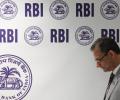
The Reserve Bank of India on Wednesday raised its policy repo rate by 25 basis points to 5.50 per cent, beginning a rate-hike cycle as rising inflation risks, elevated global yields and resilient domestic growth strengthened the case for tighter monetary policy. The decision by the Monetary Policy Committee marks a shift from its August policy, when it kept the repo rate unchanged at 5.25 per cent and retained a neutral stance while seeking greater clarity on the inflation outlook and growth-inflation balance.

The RBI can slow the rupee's fall, but lasting stability depends on tackling the root causes of depreciation and attracting foreign investment.
Indian benchmark indices Sensex and Nifty saw declines in early trade, influenced by elevated crude oil prices stemming from renewed geopolitical uncertainties, particularly concerns surrounding the Strait of Hormuz. Track Sensex, Nifty on August 11, 2026.

Indian benchmark indices, Sensex and Nifty, saw a significant rebound in early trade, with the Sensex jumping 726 points and the Nifty climbing over 200 points, primarily driven by strong performances in IT stocks, HDFC Bank, and renewed foreign fund inflows. Track Sensex, Nifty on July 29.

India's AM Green Ammonia has signed a Binding Heads of Agreement with Japan-based JERA to supply 70,000 tonnes of green ammonia annually for five years. The green ammonia, produced at AM Green's Kakinada facility in Andhra Pradesh, will support Japan's decarbonisation efforts, particularly for ammonia-fuelled car carriers and JERA's Hekinan Thermal Power Station.

An American shrimp producer's complaint against an Indian exporter over alleged forced labour could threaten 35% of India's marine exports to the US.

"With the leverage available, I believe the scheme remains reasonably attractive," said P D Singh, India and South Asia Chief Executive Officer, Standard Chartered Bank, regarding the Foreign Currency Non-Resident (Bank) or FCNR (B) deposits.

Beijing published the world's first global framework for vocational standards. If India does not act swiftly, it will be compelled to certify its workers by someone else's rulebook, cautions Abhay Jere, ex-Vice Chairman, AICTE.

Ramayana: Part 1 had its grand premiere in Los Angeles, drawing attention ahead of its global release on November 5.

This article details the quarter-century journey of BRICS, from its inception as an economic acronym by a Goldman Sachs economist to its current status as an expanded eleven-member international bloc. It highlights its growth, key historical moments, and the significance of its upcoming summit, particularly with Iran's renewed importance in discussions.
